Recommended Age: 3 years and onwards
Purpose: To help the child become aware of the solid shapes that surround them
Level of Parent Involvement: Medium, the adult must help the child to make the playdough, then provide the language for the geometric forms, modelling how to create them with the playdough
Prerequisites
- The child must have some knowledge of the basic 2-dimensional shapes such as triangle, square, circle, rectangle etc (in a Montessori environment the child would have had many experiences working with the shapes in the geometry cabinet before being introduced to geometric solids)
- The child has completed the ‘Geometric solids’ activity from the activity library
Materials
- To make the playdough: 1 cup of plain flour, ½ cup of salt, 1 tbsp. Cream of Tartar, 1 cup of boiling water with food colouring added, 2 tbsp. oil
- Large bowl
- Wooden spoon
Preparation
- Prepare the above materials at the child’s table
Steps
- Invite the child letting them know that they will be exploring geometric solids with playdough
- Go with the child to their table and let them know that you will be making the playdough together
- Name the ingredients with the child
- Invite the child to put the flour, salt and cream of tartar in the bowl, and mix
- You add the boiling water with food colouring
- Stir into a dough
- Once the dough is cool enough place the dough on the table and invite the child to gently knead the dough until smooth
- Leave the child to knead and play with the playdough, coming back after 10 minutes
- Ask the child if they remember the geometric solids they learnt from their previous ‘Geometric solids’ exercise (cube, sphere, cone)
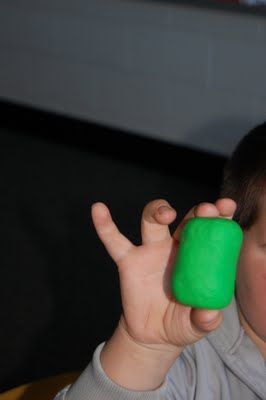
- Roll the playdough into a sphere, saying to the child “this is a sphere”
- Invite the child to make a sphere
- Invite the child to make a cone
- Invite the child to make a cube
(You may provide a butter knife for the child to cut the playdough to form sharp edges to make the cube, modelling for the child how to make the cube then inviting the child to have a turn)
- Invite the child to look for geometric solid shapes in their environment, then make with the playdough (rectangular prism, pyramid, ovoid ect)
Variations
- None